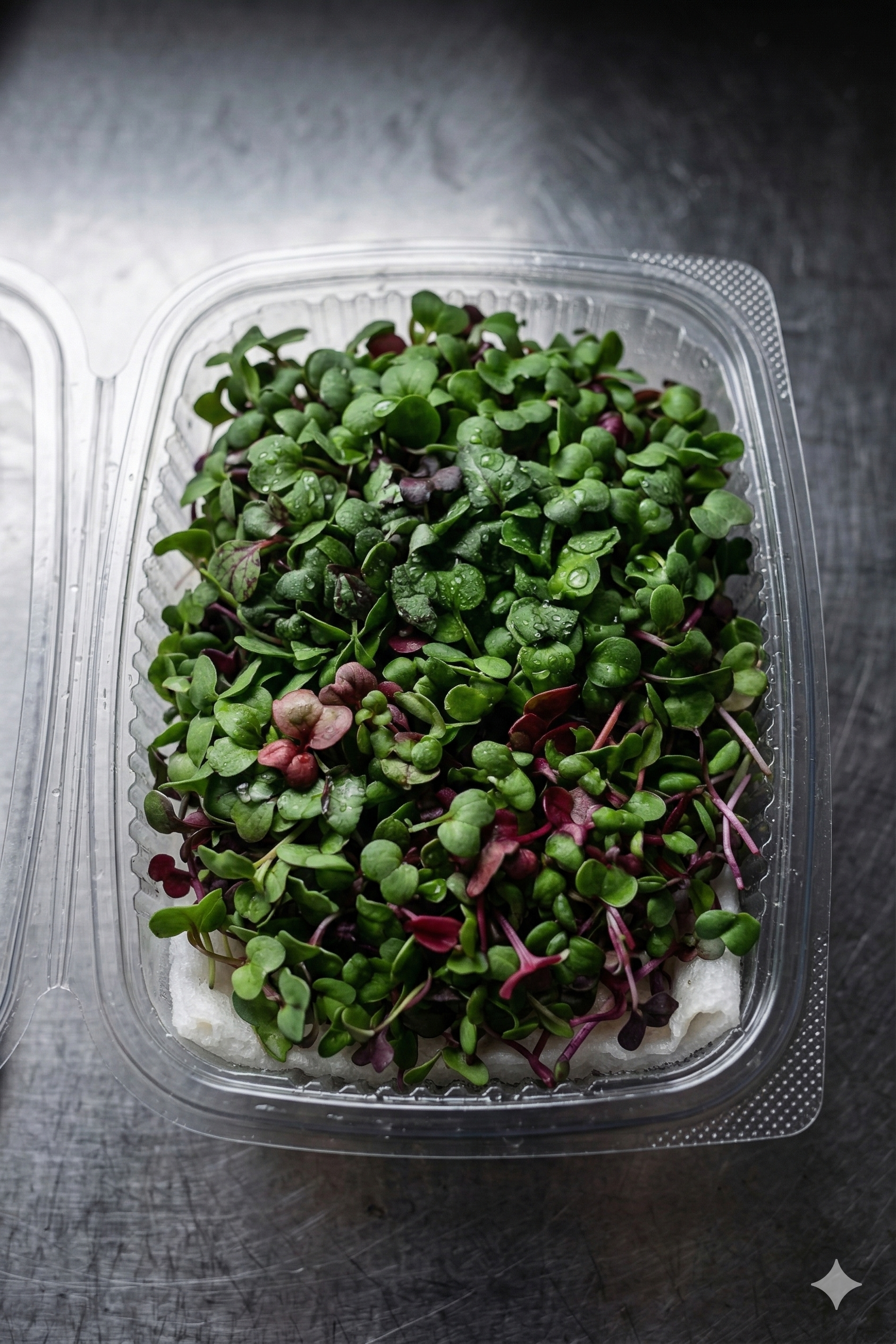
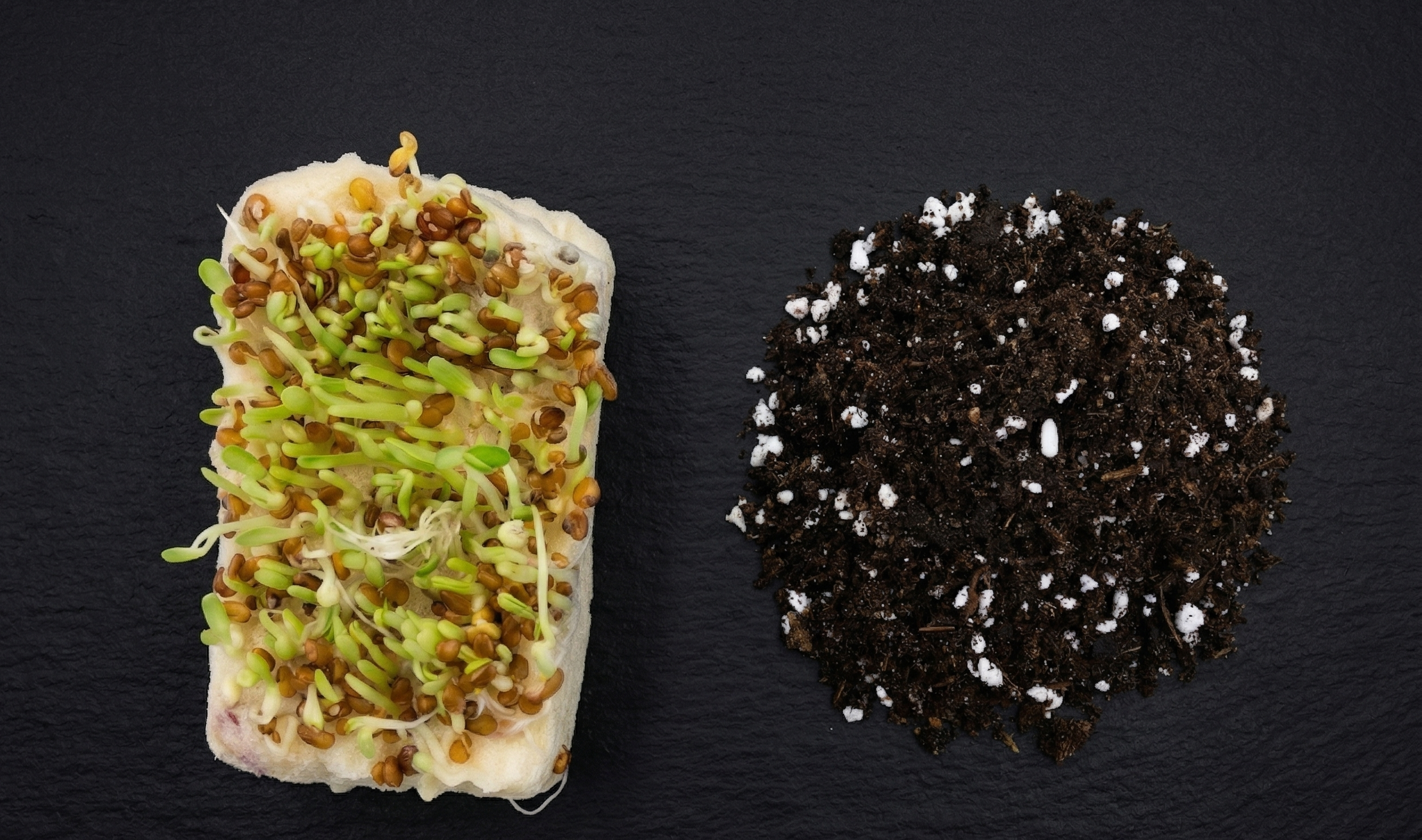
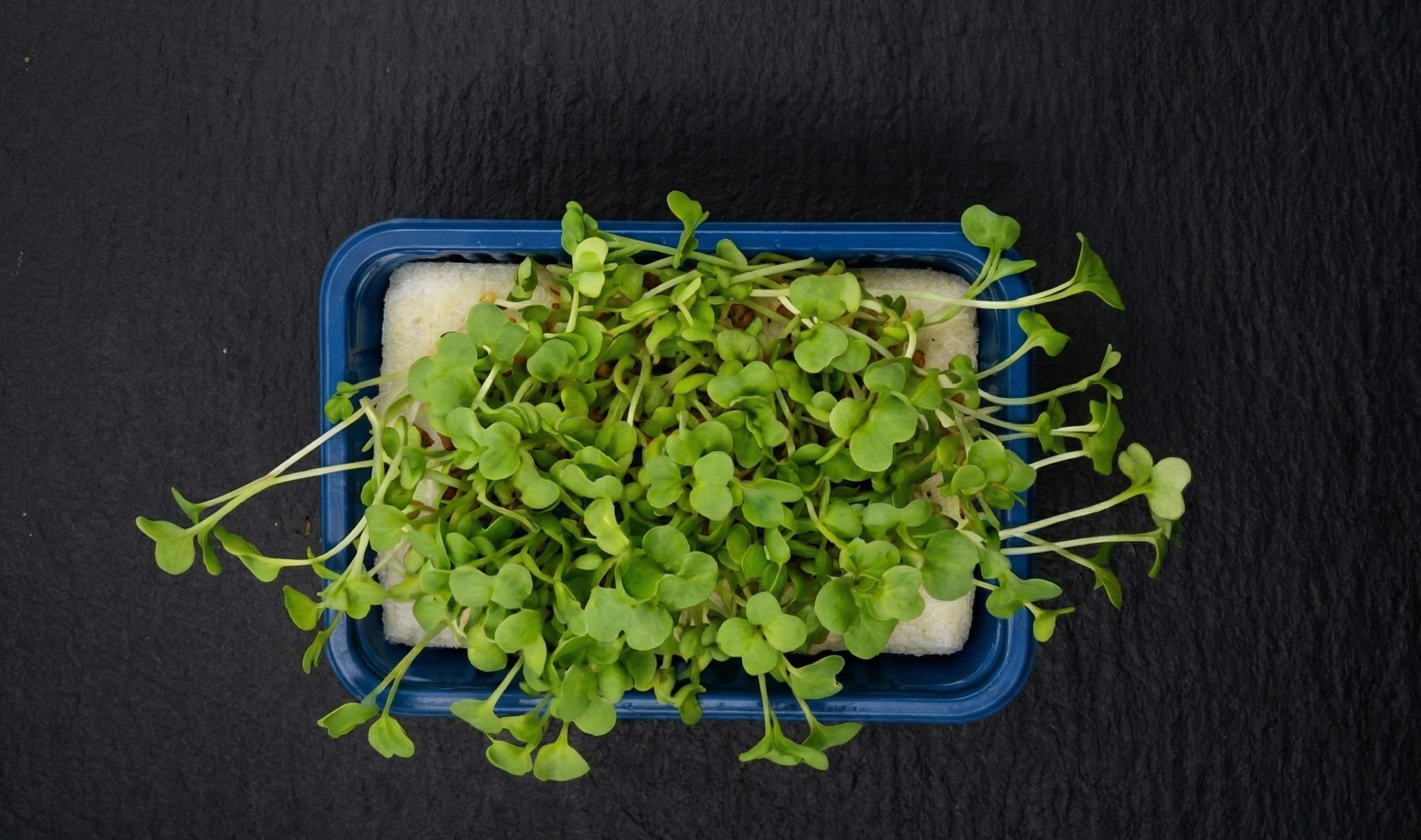
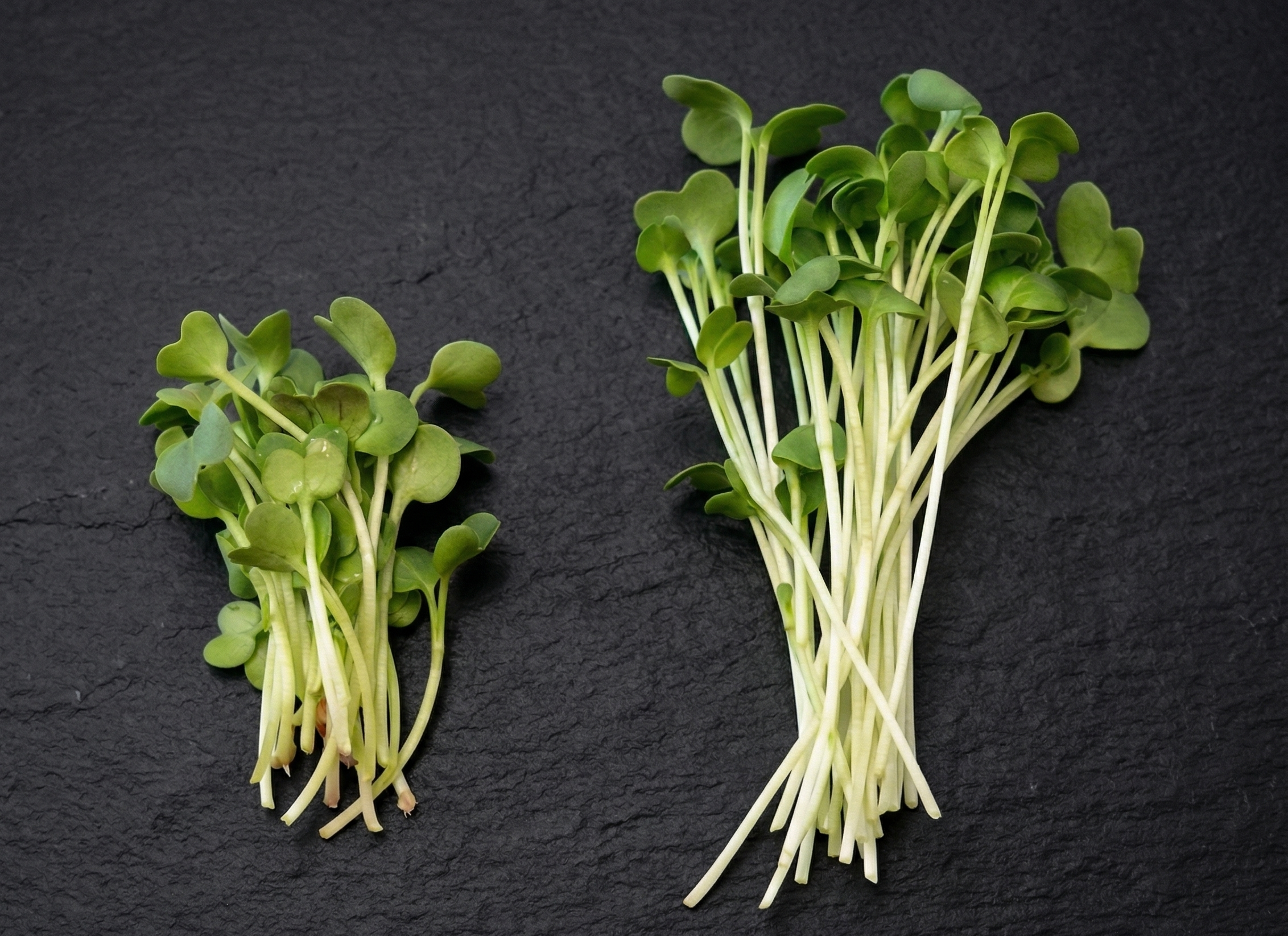
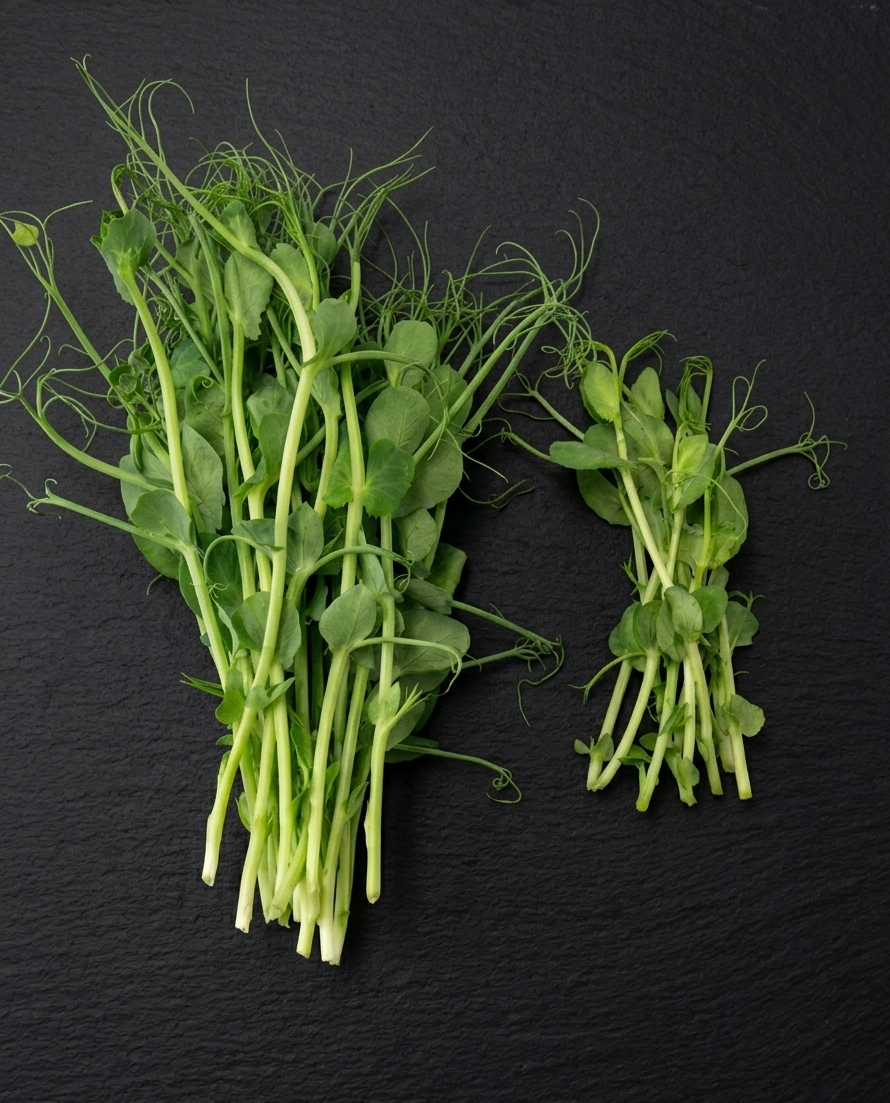
Organic soil. Peat & perlite.
Medium
Cellulose fiber (bleached wood pulp) or rockwool (spun basalt)
Zero additives
Nutrients
Synthetic NPK solutions, calcium nitrate, chelated micronutrients
Concentrated, true-to-seed. Soil stress produces more glucosinolates.
Flavor
Milder, more neutral. Higher water content dilutes flavor compounds.
Firm stems, natural crunch from pushing through soil
Texture
Softer, thinner stems. Less structural resistance during growth.
Higher polyphenols, glucosinolates, carotenoids per gram
Nutrition
Higher weight per plant, but lower nutrient density. Fertilizer pumps water, not flavor.
Cut same morning, delivered same day
Freshness
Shipped alive on sponge. You cut it yourself.
0 km. Berlin to Berlin.
Distance
~650 km from Westland, Netherlands
10 days from delivery (pre-cut, ready to plate)
Shelf Life
2 to 3 days usable after arrival. Shipped alive on sponge in plastic, chef must cut.
Direct. Producer to chef. No middlemen.
Supply
Producer → Dutch trader → German distributor → restaurant
225g = 1 compostable box
Waste
225g = ~15 small plastic containers, each with a synthetic sponge inside